Abbass, Hussein. 2021.
“Editorial: What Is Artificial Intelligence?” IEEE Transactions on Artificial Intelligence 2 (2): 94–95.
https://doi.org/10.1109/TAI.2021.3096243.
Archambault, Susan, and José Rincón. 2024. “An Evaluation of Cutting-Edge AI Research Tools Using the REACT Framework.” Computers in Libraries 44 (8).
Bates, Marcia J. 1989.
“The Design of Browsing and Berrypicking Techniques for the Online Search Interface.” Online Review 13 (5): 407–24.
https://doi.org/10.1108/eb024320.
Björneborn, Lennart. 2022.
“Adjacent Possible.” In
The Palgrave Encyclopedia of the Possible, edited by Vlad Petre Glăveanu, 16–28. Cham: Springer International Publishing.
https://doi.org/10.1007/978-3-030-90913-0_100.
Boer, Laurens, and Jared Donovan. 2012.
“Provotypes for Participatory Innovation.” In
Proceedings of the Designing Interactive Systems Conference, 388–97. Newcastle Upon Tyne United Kingdom: ACM.
https://doi.org/10.1145/2317956.2318014.
Cai, Alice, Ian Arawjo, and Elena L. Glassman. 2024.
“Antagonistic AI.” arXiv.
https://doi.org/10.48550/arXiv.2402.07350.
Chevillon, Guillaume. 2026. Algorithmes queers: perturber les technologies, imaginer nos futurs. Culture 22. Montreuil: Éditions B42.
Drucker, Johanna. 2013. “Performative Materiality and Theoretical Approaches to Interface.” Digital Humanities Quarterly 007 (1).
Dumas Primbault, Simon. 2023.
“Naviguer dans les savoirs à l’ère numérique. Pour une ethnographie des pratiques informationnelles sur Gallica.” Études de communication. langages, information, médiations, no. 61 (December): 61–89.
https://doi.org/10.4000/edc.16108.
———. 2025. “La Découvrabilité Comme ”Prise” - Pratiques de Détournement Du Moteur de Recherche de Gallica.” In Découvrabilité Des Contenus Culturels Et Scientifitques, edited by Lise Verlaet and Chloé Delaporte. Montpellier, France.
Erdelez, Sandra. 1999.
“Information Encountering: It’s More Than Just Bumping into Information.” Bulletin of the American Society for Information Science and Technology 25 (3): 26–29.
https://doi.org/10.1002/bult.118.
Finn, Finola, Donal Khosrowi, Caio Mello, Marten Düring, and Danielle Guido. 2026. “Shaping History, Responsibly: Seven Principles to Guide the Design of Archival AI Assistants for Cultural Heritage Collections.” In ACM FAccT. Montréal.
Goodfellow, Ian J., Jean Pouget-Abadie, Mehdi Mirza, Bing Xu, David Warde-Farley, Sherjil Ozair, Aaron Courville, and Yoshua Bengio. 2014.
“Generative Adversarial Networks.” arXiv.
https://doi.org/10.48550/arXiv.1406.2661.
Guérard, Élisabeth, Mehrdad Almasi, Marion Salaün, and Frédéric Clavert. 2026. “Towards an Interactive ‘Evidence-RAG’ Peer- Review Workspace for the Journal of Digital History.” Long {{Talk}}. Esch-sur-Alzette.
Kauffman, Stuart A. 1996.
“Investigations.” Working {{Papers}} 96-08-072. Santa Fe Institute.
https://doi.org/None.
Monechi, Bernardo, Ãlvaro Ruiz-Serrano, Francesca Tria, and Vittorio Loreto. 2017.
“Waves of Novelties in the Expansion into the Adjacent Possible.” PLOS ONE 12 (6): e0179303.
https://doi.org/10.1371/journal.pone.0179303.
Pariser, Eli. 2012. The Filter Bubble: What The Internet Is Hiding From You. London: Penguin.
Patterson, Brandon, Carlos Flores, Nick Hauschild, and Jared Branch. 2025.
“Which AI Tools Work Best for Research? Using Librarian and Student Perspectives to Inform a Rating Rubric.” Journal of Electronic Resources in Medical Libraries 22 (3): 133–38.
https://doi.org/10.1080/15424065.2025.2546052.
Pouyllau, Stéphane. 2023. “Utiliser isidore.science : un regard sur les usages d’un moteur de recherche académique.” {Keynote}.
———. 2025. “<< Durabilité et refactorisation des instruments de la recherche en SHS : le cas d’isidore.science et le projet ISIDORE 2030 >>.” Montréal.
Puren, Marie, Donghan Bian, Aurélien Pellet, Julien Perez, and Florian Cafiero. 2026. “Aligner méthode historique et RAG: transformer un assistant conversationnel en chaîne de preuve auditable et discutable.”
Raza, Shaina, Mizanur Rahman, Safiullah Kamawal, Armin Toroghi, Ananya Raval, Farshad Navah, and Amirmohammad Kazemeini. 2025.
“A Comprehensive Review of Recommender Systems: Transitioning from Theory to Practice.” arXiv.
https://doi.org/10.48550/arXiv.2407.13699.
Schneider, Alexia. 2026. “An Imperfect AI to Uphold Human Agency : Vindicating the ‘Yes but’ of This World.” Short {{Talk}}. Montréal.
Schneider, Alexia, Pierre Levy, and Marcello Vitali-Rosati. 2026. “Reclaiming Epistemic Agency in AI-Assisted Research: A Recommender System That Reveals, Rather Than Hides, IR Logic.” Daejeon, South Corea.
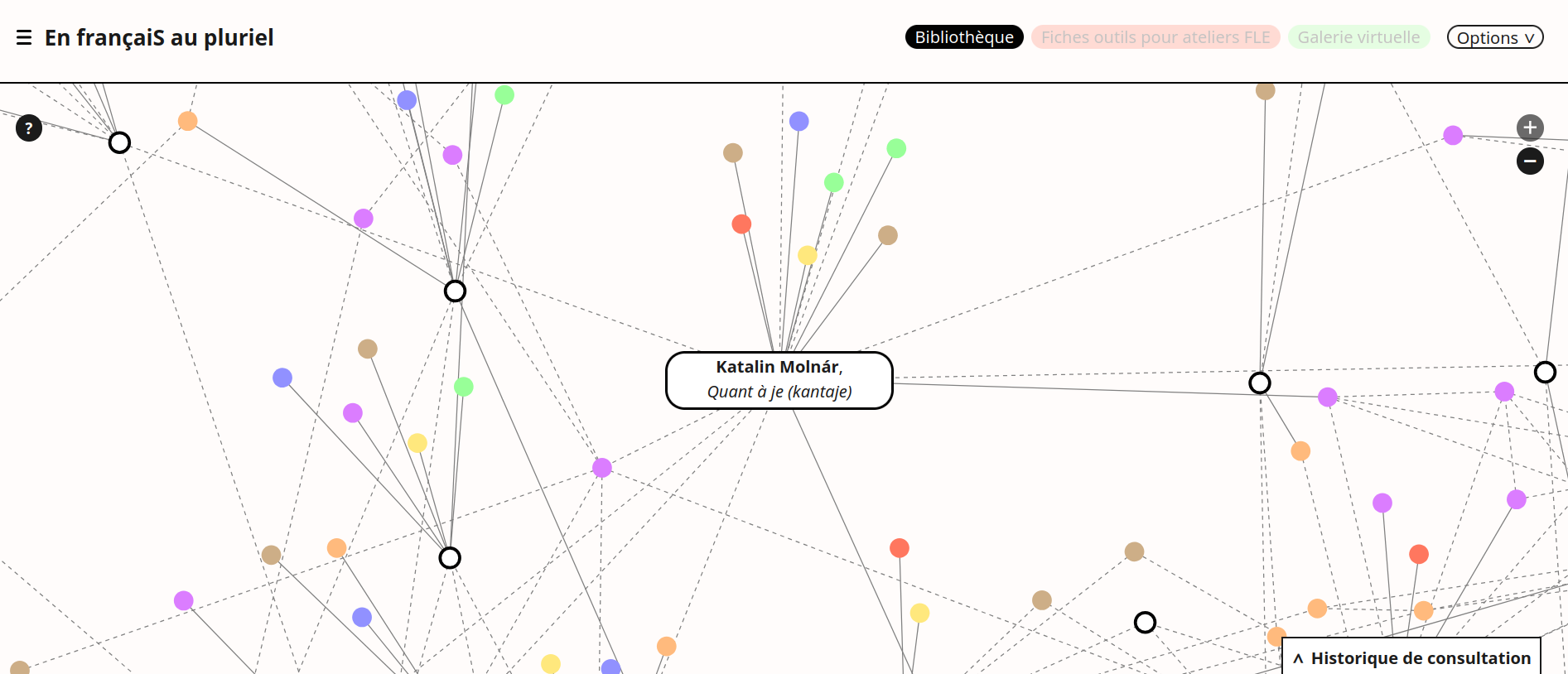
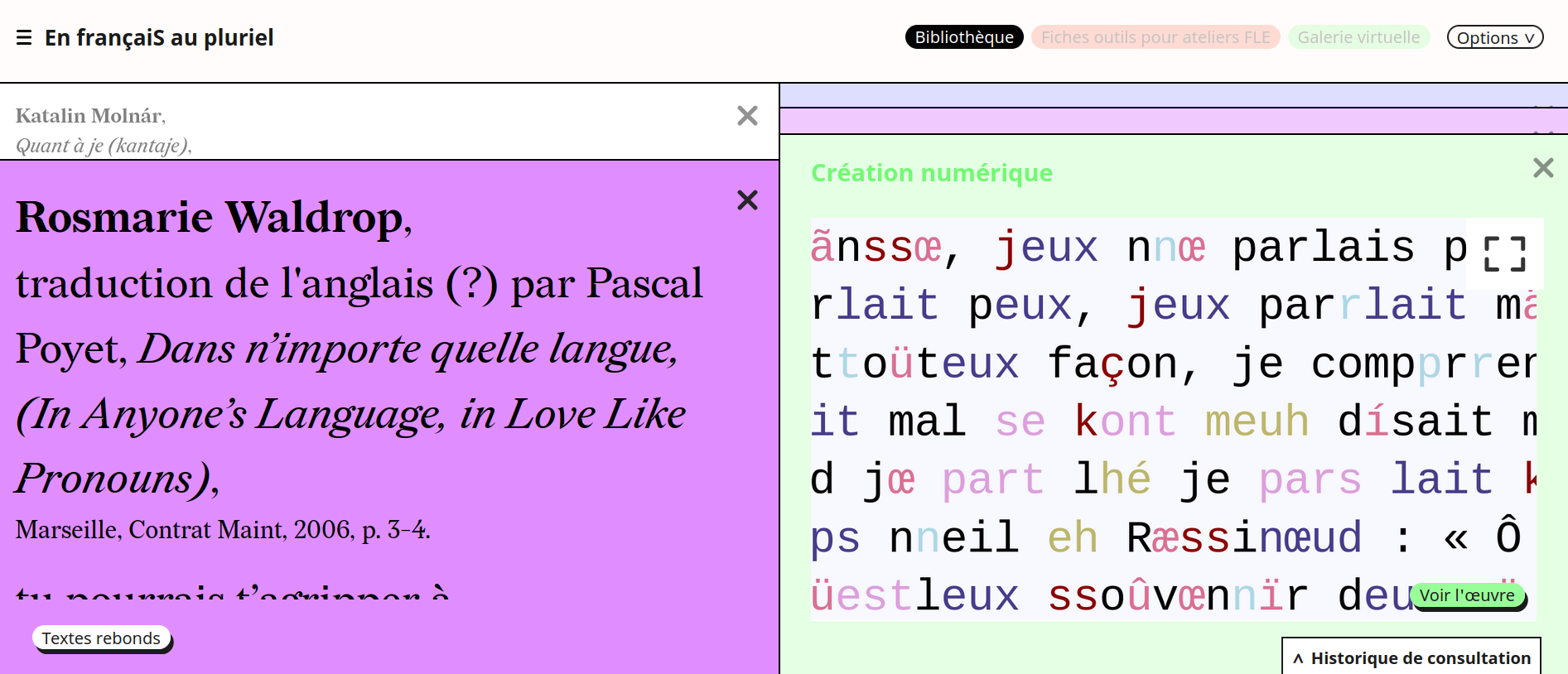
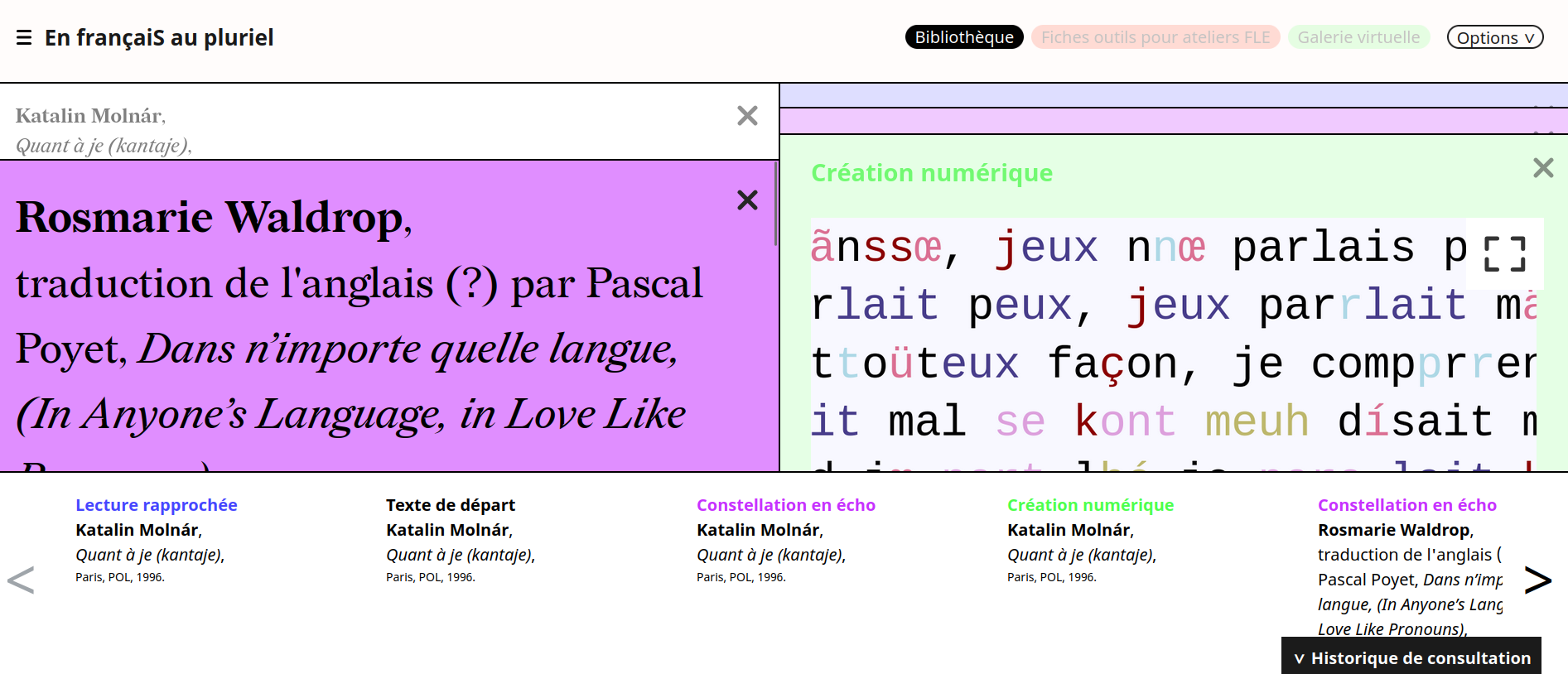
Suchet, Myriam. 2026. “En françaiS Au Pluriel.” En françaiS Au Pluriel. https://www.enfrancaisaupluriel.fr/pages/266.
Tay, Aaron. 2025. “What Do We Actually Mean by "AI-Powered Search"?” Substack Newsletter. Aaron Tay’s Musings about Librarianship.
———. 2026. “The Blank Box Problem: Why It’s Harder Than Ever to Know What to Type Into an AI Search Bar.” Substack Newsletter. Aaron Tay’s Musings about Librarianship.
Tchounikine, Pierre. 2025. Appropriating Technology: How We Make Digital Tools Our Own. Edited by Victor Kaptelinin, Kirsten A. Foot, and Bonnie A. Nardi. Acting with Technology. Cambridge, MA, USA: MIT Press.